Help one more voice stay remembered.
Katha Hijo Ko records the lived memories of Nepal's elders before those stories disappear. Your contribution helps make the travel, recording, careful editing and practical support around each visit possible.
Less administration. More time sitting, listening and preserving.
Each elder's story takes more than pressing record. The work starts with reaching people and continues through patient conversations, safe storage, days of editing and respectful publication.
-
Travel and field logistics.
Fuel, local travel, permits and the practical costs of reaching elders where they live. -
Recording and preservation.
Batteries, storage, equipment maintenance and duplicate copies that keep recordings safe. -
Careful editing.
Interviews can take several days to edit so the story remains clear without losing the elder's voice. -
Care during visits.
Food packages and small practical support are provided during many visits when appropriate.
Payment stays with GoFundMe. Katha Hijo Ko does not ask you to enter card details into this website. The secure donation form is provided by GoFundMe, and a direct GoFundMe link is always available below.
Choose the amount that feels right.
The form below is GoFundMe's donation widget. You can also open the campaign directly if you prefer.
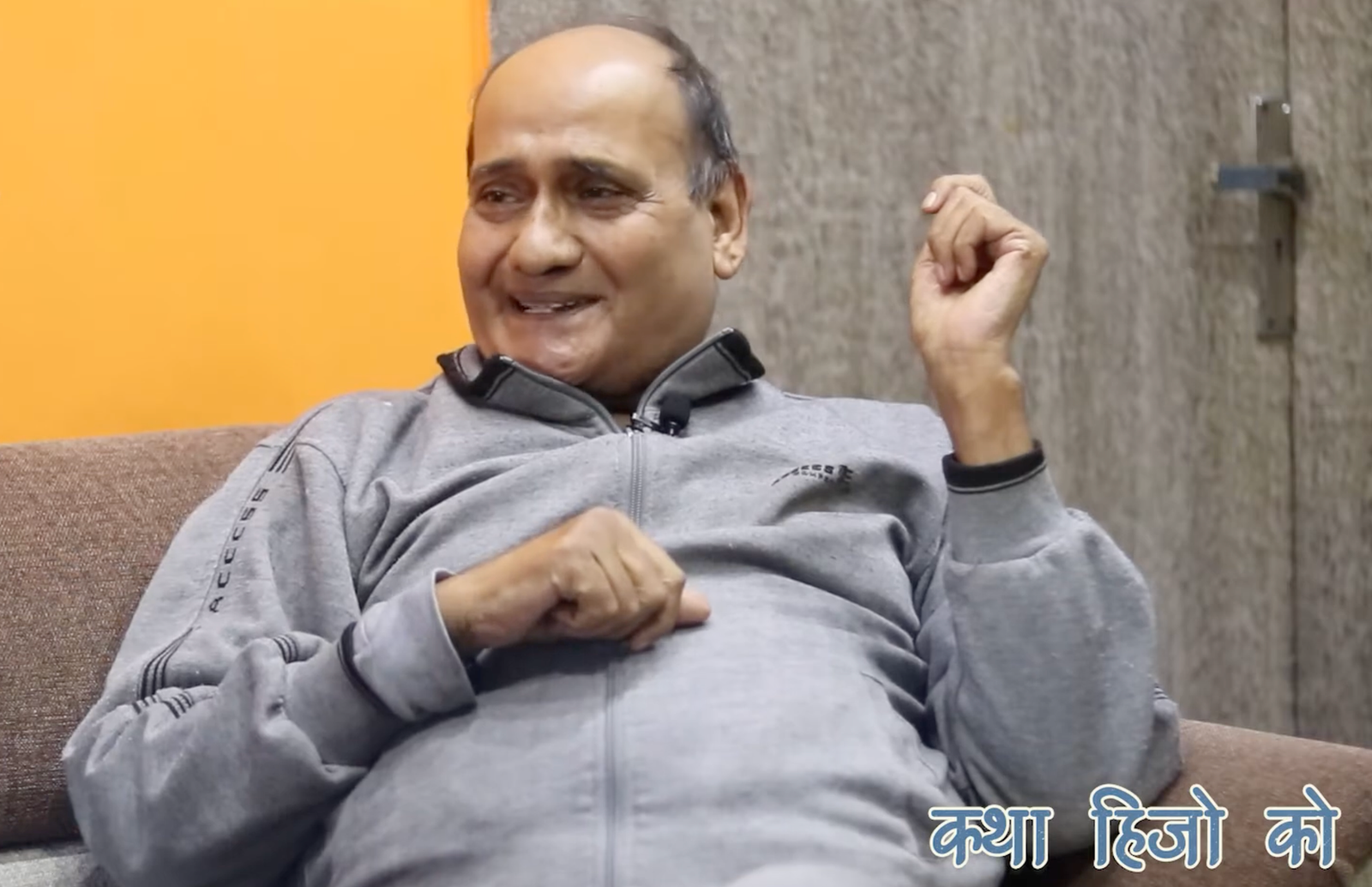
Rajendra Prasad Bimal
Prof. Dr Rajendra Prasad Bimal (1947–2026) was a Janakpurdham-based writer, linguist, educator and cultural activist whose work made important contributions to both Maithili and Nepali literary life. A long-time Tribhuvan University educator, he worked across fiction, poetry, drama, criticism, children's literature, translation and linguistics. He was also active in the preservation and promotion of Maithili language and culture and received major honours including the Jagadamba Shree and the BP Koirala Memorial Literary Award.
Read this storyEvery year, unrecorded memory becomes harder to recover.
Everyday history often survives only through the people who lived it. Recording elders in their own words keeps those memories available for families, communities and future generations instead of reducing them to second-hand summaries.
“We don't make viral clips — we make time. We sit, eat and listen until the stories flow. That trust is what you're funding.”
5 elder stories are currently published in the public archive.